Buying Criteria
Start with shape and handedness: comfort matters more than headline DPI. Then compare weight, wired versus wireless connectivity, polling rate, button count, onboard memory, software support, and battery or charging needs. Very light mice suit quick directional movement, while heavier ergonomic models can provide more controls. Check desk space, grip style, operating-system compatibility, and whether Bluetooth is actually needed before choosing.
Product Findings
Logitech G PRO X Superlight 2
Specifications
A 60 g symmetrical wireless mouse with HERO 2 sensor, up to 44,000 DPI, up to 8 kHz polling, five buttons, USB-C charging, and up to 95 hours of claimed battery life.
Why it stands out
Its unusually low weight and high documented polling ceiling make it the clearest competitive-focused option in this group.
Limitation
It omits Bluetooth and offers fewer controls than the ergonomic alternatives.
Best for
Players who want a light, simple wireless mouse for fast games.
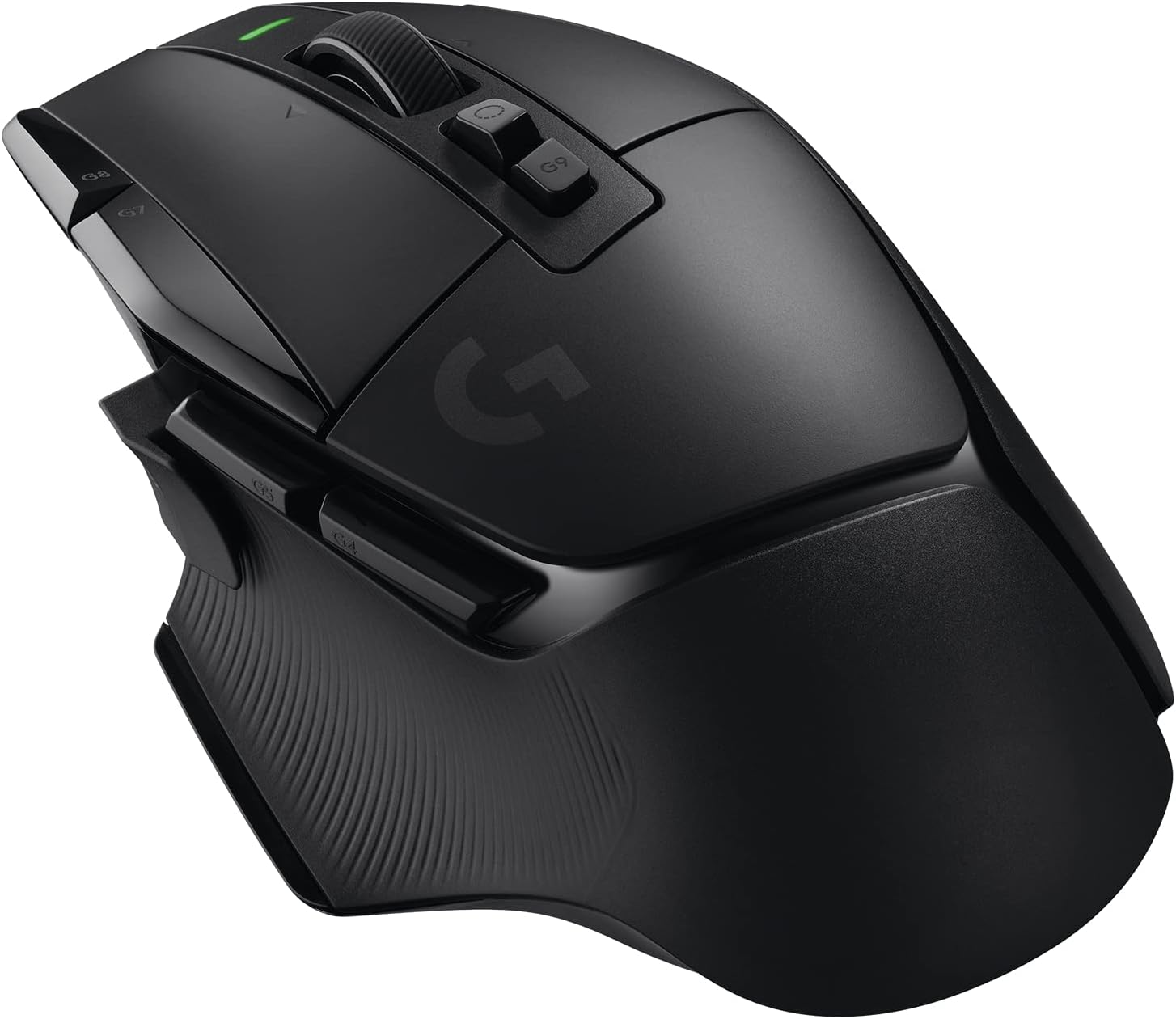
Logitech G502 X LIGHTSPEED
Specifications
A 102 g right-handed wireless mouse with HERO 25K sensor, 25,600 DPI ceiling, 13 programmable controls, five onboard profiles, and up to 140 hours of claimed battery life.
Why it stands out
The broad control set, onboard profiles, dual-mode wheel, and long battery claim provide the most customization here.
Limitation
Its weight and right-handed shape are less suited to shoppers seeking an ultralight neutral design.
Best for
Players who want many commands available directly under hand.
Razer Basilisk V3
Specifications
A 101 g wired right-handed mouse with Focus+ 26K sensor, 26,000 DPI ceiling, 1,000 Hz polling, 11 programmable buttons, and five onboard profiles.
Why it stands out
Its ergonomic thumb support, extensive controls, and flexible scroll-wheel modes stand out among wired choices.
Limitation
The cable and higher weight reduce freedom for shoppers prioritizing lightweight wireless movement.
Best for
Players who prefer a wired ergonomic mouse with deep button customization.
HyperX Pulsefire Haste 2 Wireless
Specifications
A 61 g symmetrical mouse with 2.4 GHz, Bluetooth 5.0, and USB-C wired modes, HyperX 26K sensor, up to 1,000 Hz polling, six buttons, and up to 100 hours claimed battery life.
Why it stands out
Tri-mode connectivity and low weight make it the most flexible value-oriented option in this shortlist.
Limitation
It stores only one onboard profile and has a simpler control layout.
Best for
Shoppers who want lightweight wireless freedom plus Bluetooth at a more value-focused position.
Methodology
ChoiceCheckLab did not conduct original hands-on or laboratory testing for this comparison. We evaluated current US-market models using official manufacturer specifications, warranty information, Amazon US listing identity and availability, and reputable independent review context where useful. Recommendation labels reflect documented differences in weight, connectivity, controls, sensor specifications, software, battery claims, and intended use rather than invented benchmark results.
Limitations
Manufacturer battery-life claims depend on polling rate, lighting, sleep behavior, and usage. Shape comfort is personal and cannot be determined from specifications alone. Amazon availability can change after publication. We did not add prices, customer ratings, review counts, latency measurements, or sensor-performance claims because stable verified numeric snapshots were not available for this comparison.